

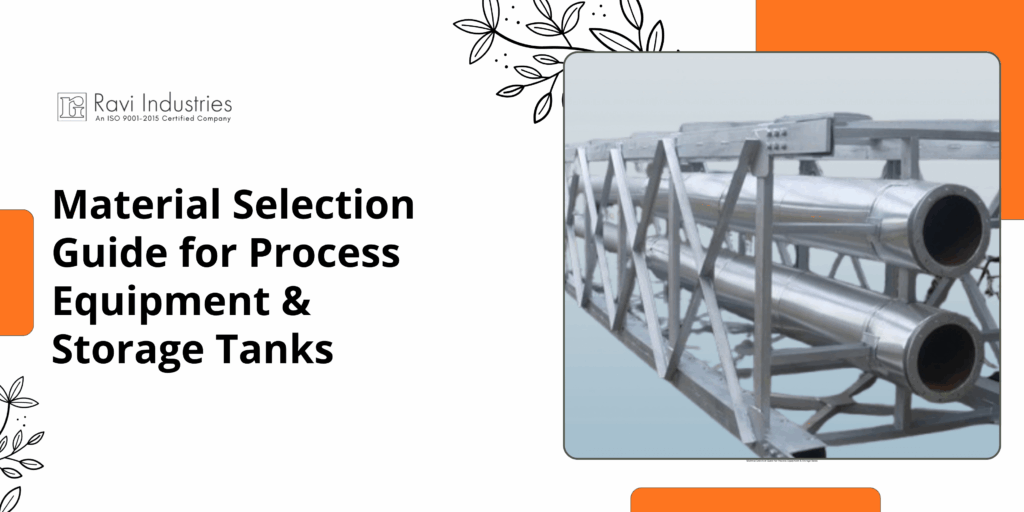
In the world of heavy engineering and industrial fabrication, one of the most critical decisions is selecting the right material for process equipment and storage tanks. The performance, safety, and lifespan of these structures depend heavily on the material’s strength, corrosion resistance, and suitability for specific applications. Whether it’s chemical storage, oil and gas processing, or water treatment, making informed material choices ensures efficiency and reliability throughout the equipment’s operational life.
Why Material Selection Matters
The right material impacts not just durability but also cost-effectiveness, safety, and maintenance. Poor material selection can lead to premature failure, leaks, contamination, and expensive downtime. By choosing appropriate metals or alloys, industries can ensure their storage tanks and process equipment meet rigorous performance and safety standards.
1. Carbon Steel – Cost-Effective & Strong
Carbon steel remains one of the most popular choices for industrial fabrication due to its strength, durability, and affordability. It is ideal for storing non-corrosive materials and handling high-pressure conditions. For many industries, carbon steel offers an excellent balance between performance and cost, making it a preferred option for large process tanks and vessels.
Advantages:
- High tensile strength
- Cost-effective
- Suitable for high-pressure applications
However, carbon steel is prone to rust and corrosion when exposed to moisture or harsh chemicals. Hence, protective coatings or linings are often applied to extend its lifespan.
2. Stainless Steel – Corrosion Resistant & Versatile
Stainless steel is widely used in industries like food processing, pharmaceuticals, water treatment, and chemicals. Its high resistance to corrosion and ability to withstand extreme temperatures make it a reliable choice for long-term use. Grades like SS304 and SS316 are particularly popular for storage tanks and process equipment.
Advantages:
- Excellent corrosion resistance
- Easy to clean and maintain
- Long operational life
Although stainless steel is more expensive than carbon steel, its durability and low maintenance often make it more cost-effective in the long run.
3. Aluminium – Lightweight & Durable
Aluminium is gaining popularity in certain sectors due to its lightweight nature and good corrosion resistance. It is especially suitable for portable tanks and applications where mobility is crucial. Aluminum fabrication services also offer excellent thermal conductivity and workability, making it easier to shape and customize for complex designs.
Advantages:
- Lightweight yet strong
- High resistance to corrosion
- Easy fabrication and installation
4. Special Alloys – For Harsh Environments
For highly corrosive or demanding applications, industries often turn to special alloys like Hastelloy, Inconel, or Monel. These materials offer exceptional performance in aggressive environments such as chemical processing, offshore operations, and power generation. While the initial investment may be higher, their extended service life and minimal maintenance make them ideal for specialized use.
Advantages:
- Exceptional resistance to corrosion and high temperatures
- Suitable for critical industrial environments
- Long operational lifespan
5. Factors to Consider Before Choosing the Material
Selecting the right material goes beyond cost and availability. Several factors should guide the decision-making process:
- Chemical Compatibility: The material must resist any chemical reactions with stored substances.
- Operating Conditions: Consider temperature, pressure, and environmental exposure.
- Corrosion Resistance: Ensures long-term durability and safety.
- Weight and Mobility: Aluminium may be better for portable solutions, while steel suits stationary equipment.
- Maintenance Requirements: Stainless steel and alloys reduce maintenance needs compared to untreated carbon steel.
- Budget: Initial investment vs. long-term operational costs.
6. Expert Fabrication Ensures Quality
Even the best material can fail if not fabricated properly. Partnering with a leading fabrication services provider in Gujarat ensures that the design, welding, cutting, and assembly of tanks and equipment are executed with precision and industry compliance. Techniques like CNC laser cutting, sheet metal fabrication, and on-site structural erection fabrication in India enhance quality and operational efficiency.
Conclusion
Material selection is a key step in ensuring the performance, safety, and reliability of storage tanks and process equipment. By understanding the properties of carbon steel, stainless steel, aluminium, and special alloys, industries can make informed decisions that align with their operational goals.
For reliable, high-quality fabrication of process equipment and storage tanks, trust the expertise of a partner who understands your needs.
Contact: deepak@raviind.com
